Nepal has always been the icon for trekking and exploring nature. With its diverse geography covering a major part of the Himalayas, it stands as a high-altitude adventure hub. Offering dozens of trekking routes inside the tranquil nature and authentic culture through off-the-beaten trails is what makes Nepal a great place to explore.
For travelers from all around the world, the trail of Nepal is not just a bucket-list, it's also the gesture of a once-in-a-lifetime experience. The rich nature, wildlife, scenic landscapes, mystical vibes, cultural immersion, and spiritual self-discovery are attracting the travel enthusiasts and trekkers to make their ultimate memorable journey.
Trekking in Nepal, a highlighted phrase for travel, with popular trails inside the Everest Region, Annapurna Region, Manaslu Region, etc, is now shifting towards secret trails. The unexplored regions or less-traveled routes are now the ultimate goal for trekkers and travelers in the exploration of Nepal. Frustrated by the commercialized trails or seeking authentic regions to explore, experienced backpackers, cultural travelers, and independent trekkers are getting into the crowd-free Himalayan experiences.
Even for the luxury travelers, the interest is shifting towards the authentic experience, different from what pay-to-enroll offers. Besides the lavish stays, expensive packages, and similar experiences, the original taste is now a new and ultimate side for exploring spirits, to experience the raw travelling.
Also, the fact that newer generations like Gen Z prefer to do off-the-beaten travelling, which can be seen as preferable to uncrowded routes, as well as being more into the unexplored terrains. It makes the shifting era in Himlayan travelling is huge influencing the newer generations too.
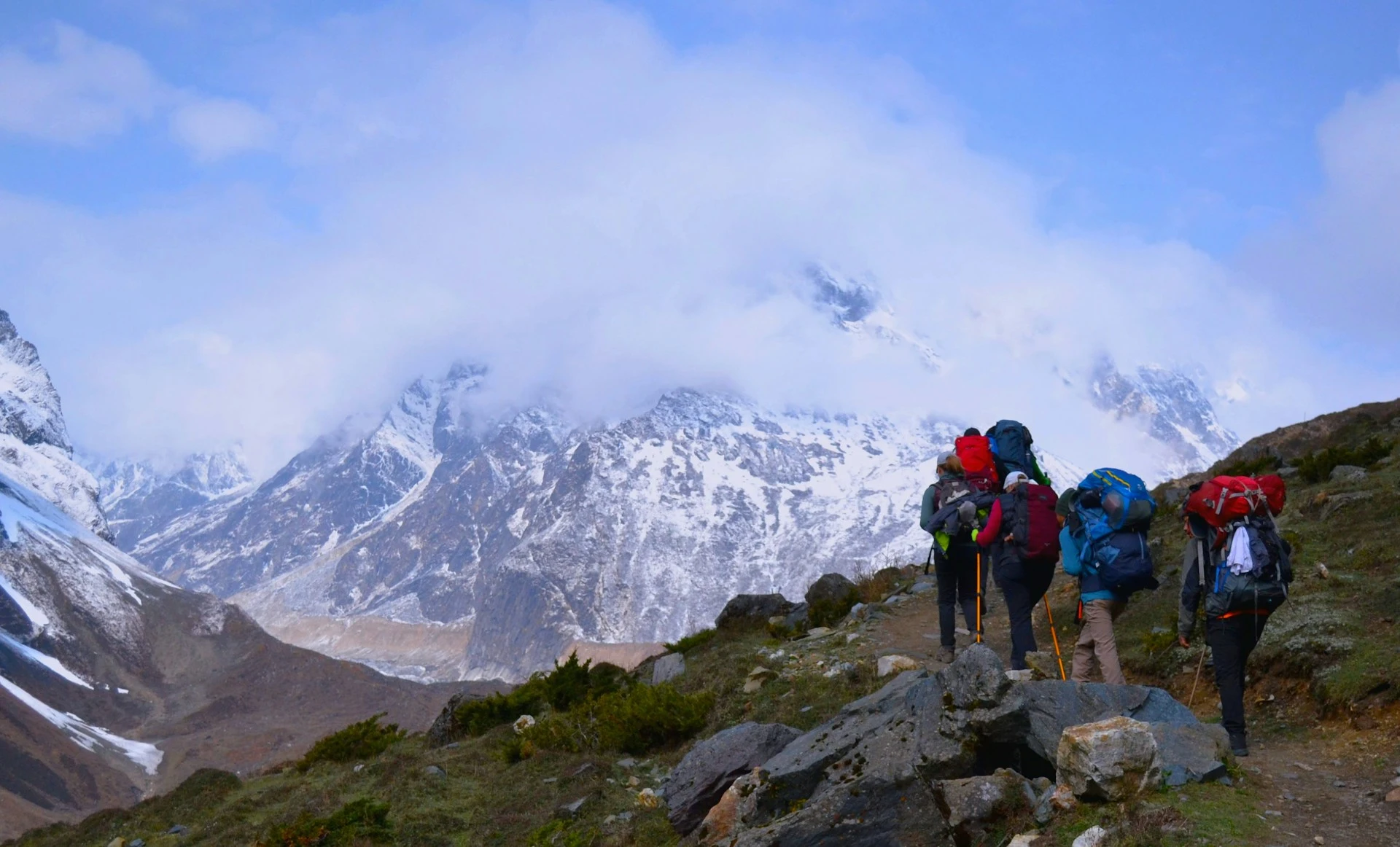
Trekkers walking past empty and unspoiled trail of Manaslu Circuit Trek. img: Himalaya King
The Shifting Era of Himalayan Adventure
In the past few decades, travelling to the Himalayan terrain has become a trend. Travelers mostly tend to trek the routes that are highlighted or popular among people. The trails like Everest Base Camp Trek, Annapurna Base Camp Trek, Everest Panorama Trek, etc., were among the top picks.
The result: it followed the overcrowding of the trails, leading to a huge commercialized region. It also provided a massive income opportunity, but at the price of cultural burnout. It later again resulted in frustration in traveling, due to tackling factors for crowded trails, issues in accommodation bookings, and disturbed tranquility. These were the major falling features for which, once travelers seek to walk the Himalayas.
Also, the other development factors, such as road construction in the lower Annapurna Circuit, altered the long section that once kept the interesting side of the circuit Trek. As well, the internet connectivity also exposed the off-the-grid isolation concept in travelling, which further developed into over-connected. These factors have their own pros and cons accordingly on each side, but for the travelers who seek to get isolation in nature, it is no longer meant to be.
These factors and situations are the major setbacks which made travelers shifting towards secret trails and seek for restricted-access zones to explore the ultimate sanctuary that offers the raw and untouched taste of Nepal.
.webp)
img: Glimpse of crowded teahouse in Everest Trail.
Crowded Base Camp or Untouched Trails
In ultra-popular trekking trails like the Everest Base Camp Trek or Annapurna Base Camp Trek, a similar pattern can be seen. Due to its popularity and over-tourism, it is now literally flavourless for the isolation-travelers. Everything is commercialized, even the local foods and cuisines, which are among the major authentic experiences to have. Such heavy exploitation of cultural and lifestyle burnout is now unacceptable for some travelers looking for tranquility.
.webp)
Glimpse of crowded trail towards Everest Base Camp.
On the other hand, the loop is also similar for accommodation and transportation. Trekkers now have to tackle competitive teahouse room bookings as well as delayed domestic flights due to heavy schedules for the high demand. As well inside the trail, the condition seems the same, passing crowded routes, over-photography, and filled scenic spots.
So, the Secret trails, or off-the-beaten trails, are now the alternative to experience authentic Nepal. It is not only because of its secret, but the restricted permits act as an institutional filter that caps the daily foot traffic to protect the routes from over-tourism.
These initiatives have been effective to preserve unique indigenous cultures of people like Lo or Gurung. The isolation is helping a lot from the influence of commercialization and to remain in its raw taste. And it's giving the ultimate attraction for travelers of the new generation, too.
Hidden Beauty of High-altitude Desert Sanctuary
One of the isolated regions getting the highlight for secret trails is with the Upper Mustang Trek. It is a high-altitude desert which is still keeping the geography and culture untouched or uninfluenced by modern touch.
The beauty of Mustang begins with its unique geology. Due to very low rainfall, it has turned into a high-altitude desert. It includes landscapes consisting of vast, arid plateaus. It is defined by yellow canyons , crimson cliffs and ancient wind-eroded architecture. And the traditional agriculture in between all this adds magical beauty inside the mystical land.
Along with the geological scenic features, the cultural preservation in Upper Mustang is worth appreciating. It has preserved the lifestyle in the way of cultural practices that have been in day-to-day life for centuries.
The Mystical Land of Lo Manthang
The iconic medieval historic Kingdom of Lo, also known as Lo Manthang, offers travelers the opportunity to explore the 15th-century monasteries with gold-leaf frescoes. Lo is the capital of Mustang Region and is also one of the last fully intact medieval wall cities in South Asia. As it was recently opened for outsiders, it is also known as the last forbidden kingdom of Nepal. It is also surrounded by the multi-made sky caves of Chhoser, which give a glimpse of ancient Himalayan civilization.
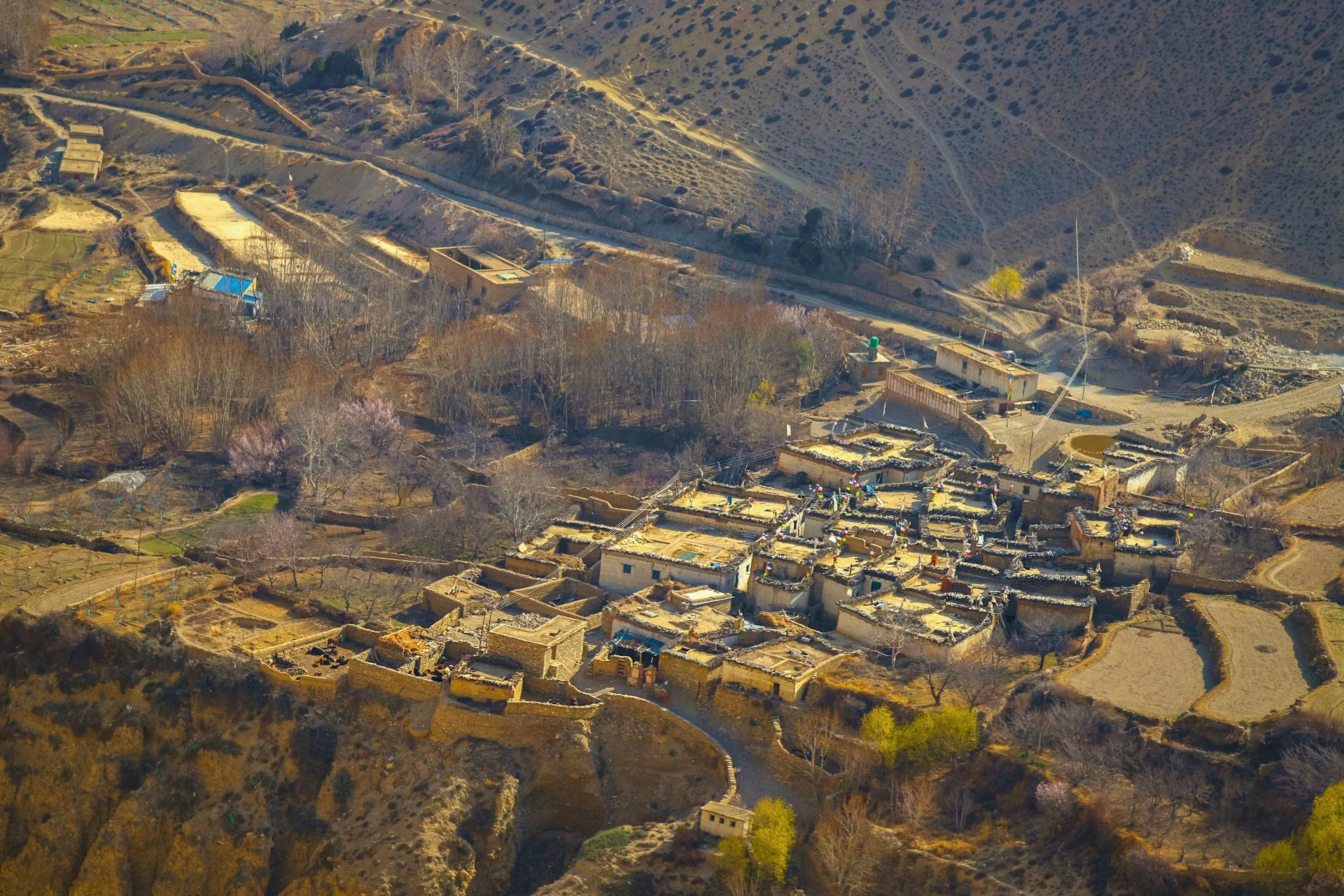
Walled kingdom of Lo Manthang
The Monsoon Savior
Another aspect of Mustang is that it avoids the rainfall with its arid landscapes. Very low rainfall can be seen even during the monsoon. It makes Upper Mustang among the very few destinations in the world where travelers can comfortably trek during the Monsoon season. The rest of the South experiences torrential rain, making Mustang a unique experience to have.
Spotlight on Alternative Trails: Some Best Off-the-beaten trails in Nepal
The Manaslu Circuit Trail
Inside the Manaslu Region, the trail of the Manaslu Circuit circles Mount Manaslu. It is the world's eighth-highest peak in the world with an altitude of 8163m. Being known as an isolated natural region, it offers raw alpine scenery with untouched tranquility. The wildlife also keeps its natural habitat. Alongside the authentic Tibetan-influenced Nubri culture adding the original side of local foods and cuisines in its original taste, which makes it an outstanding off-the-beaten trail. The landscapes without the encroaching highway or any other infrastructure concentration, it remains in their raw nature.
The Hidden Valley of Nar Phu
Another hidden gem is the isolated Nar Phu valley, which is hidden behind the Annapurna Range. Near to the Tibetan border, the influence of culture and lifestyle is seen very similarly to what we can see in Tibet. Far from the popular trail and behind the massive range of Annapurna, it is surrounded by steep rock canyons. In other words, it is isolated by nature itself.
The villages with ancient stone houses in Nar and Phu, living with the authentic lifestyle, make it even more flavourable as a secret destination to explore. Also, the intense crossing of the high Kang La Pass adds an adventurous side.
Tsum Valley
With the sacred pilgrimage valley known for its distinct Buddhist tradition, Tsum Valley is a far isolated region from the modern touch. With rugged trails to get there, it offers an original experience of trekking in Nepal, with the taste of traditional travel in the Himalaya. Also, the region has an absolute ban on any animal slaughter or hunting, known as "Ahimsa" in local terms, keeping its spark for the travelers to explore the untouched regions. There, the historic meditation caves, centuries-old monastery, and traditional farming valleys are what keep it beautiful. The traditions and lifestyle are also in their original form, similar to centuries-old traditions.
Essential Logistics and Packing for Off-the-beaten Trails
Logistics and packing are another important aspect of travelling, and a bit complex if the journey involves travelling to isolated trails. The best approach for packing is to keep the layering for diverse environments. The trails range from cold to hot as the trail ascends and descends as well as dusty river valleys, passing from freezing alpine to desert nights.
For such conditional landscapes, preparing is essential with some modern inclusion too. The below are the list of some modern specialized equipment to prepare on with.
-
Windproof outwear
-
Dust-filtering face buffs
-
High-SPF polarized sunglasses
-
UV water purification
-
Backup charger for electronics
Insurance
Another important aspect to pay attention to is insurance. Sometimes it gets confusing due to its coverage policy. Some trekkers and travelers make the mistake of buying the standard comprehensive insurance with a worldwide travel policy, assuming the insurance will cover the emergency conditions.
But the majority of standard travel policies come with strict altitude restriction clauses. It cuts off at the altitude of 2500m(approx. 8200ft). It is not even the average altitude during the trek in the Himalayas. Crossing the altitude of 2500m in the Himalayas happens almost immediately after beginning the trek.
The average altitude in trekking trails during most of the trekking region passes well above the altitude where the limitation ends. So, careful review of insurance policies and its specification is very necessary for safe investment.
Here we have a quick table to get insight into what insurance specifications look like from the inside,
|
Policy Tier |
Altitude Ceiling |
What It Covers |
Himalaya Route Compatibility |
|
Standard / Basic |
Up to 2,500m (8,200 ft) |
City sightseeing, Kathmandu Valley tours, and low-altitude foothills. |
ℹ️VOID for almost all Himalayan mountain trekking. |
|
Mid-Tier Adventure |
Up to 4,500m (14,760 ft) |
Moderate valley hikes, lower viewpoint treks, and lower base camp approaches. |
✔️Valid for options like the Mardi Himal Trek or of similar altitude trekking trails |
|
Premium High-Altitude |
Up to 6,000m (19,685 ft) |
High-altitude passes, legendary base camp loops, and trans-Himalayan border zones. |
✔️ ️Mandatory for high altitude trekking like Everest Base Camp Trek and the Upper Mustang Trek. |
|
Extreme Mountaineering |
Above 6,000m+ (Special Rider) |
Technical climbing, fixed ropes, glacier navigation, and true summit pushes. |
✔️Mandatory for extreme peaks like Mera Peak Climbing or full 8,000m expeditions. |
The Vital Role of Modern Sherpa and Guide in Shifting Tourism
Travel guides are not just people trained to read maps or to navigate travelers. Now, in 2026, the professional local guides are well-prepared and trained in safety management. They also keep their attention on ensuring the safety of their clients. Alongside, they are also cultural translators as well as ecological stewards, which helps to maintain safety, cultural insights, as well as responsible travelling. With such promishing support, travelers are now intrested in taking the guide with them for better understanding of trail, culture and nature.
Safety and Acclimatization Monitoring
Now the guides are trained to identify the subtle, silent markers of high-altitude emergencies like Acute Mountain Sickness(AMS), High Altitude Pulmonary Edema(HAPE), and High Altitude Cerebral Edema(HACE).
They not only recognize these issues, but they also know exactly when to coordinate satellite communications or a helicopter evacuation, according to the situation. It ensures timely evacuation and medical help during emergencies.
Economic Impact on Local People
Also, hiring a guide ensures the spending of traveler's expenses for the service directly benefits the local mountain communities. It also helps with sustainable employment for local storytellers and altitude professionals, making travelling a promising career for people too.
The Newer Generation in Travel: Generation Z prefers Secret Trails
The Tourism Loop: Can Secret Trails Stay Secret?
Conclusion

Bishal Limbu
Content Writer
Adventure Awaits — Let’s Begin Your Journey