Mapping the Altitude: Everest Base Camp Elevation Metrics
Everest Base Camp Trek is one of an admired trek located on the north side of the Solukhumbu district. Everest is known as the world's highest mountain. Everest Base Camp is the beginning point of the Everest summit journey. Everest Base Camp stands at an elevation of 5,316 meters (17,598 feet) above sea level. This trek offers rewarding views, although it has moderate challenges. However, it takes you to the highest altitude. The Everest Base Camp trek is a popular destination for exploring the world's highest mountains, including other 8,000-meter Himalayan giants around Mt. Everest. Every year, trekkers from around the world travel to the Everest Region to experience spectacular mountain landscapes, Sherpa culture, ancient monasteries, and the legendary trail leading toward the foot of Mount Everest. However, the beauty of the journey comes with an important challenge of altitude. Meanwhile, the Everest Base Camp trek takes you to the homeland of legendary mountaineers such as Sir. Tenjing Norgey Sherpa, Pasang Lhamu Sherpa, Kami Rita Sherpa, and Ang Rita Sherpa.
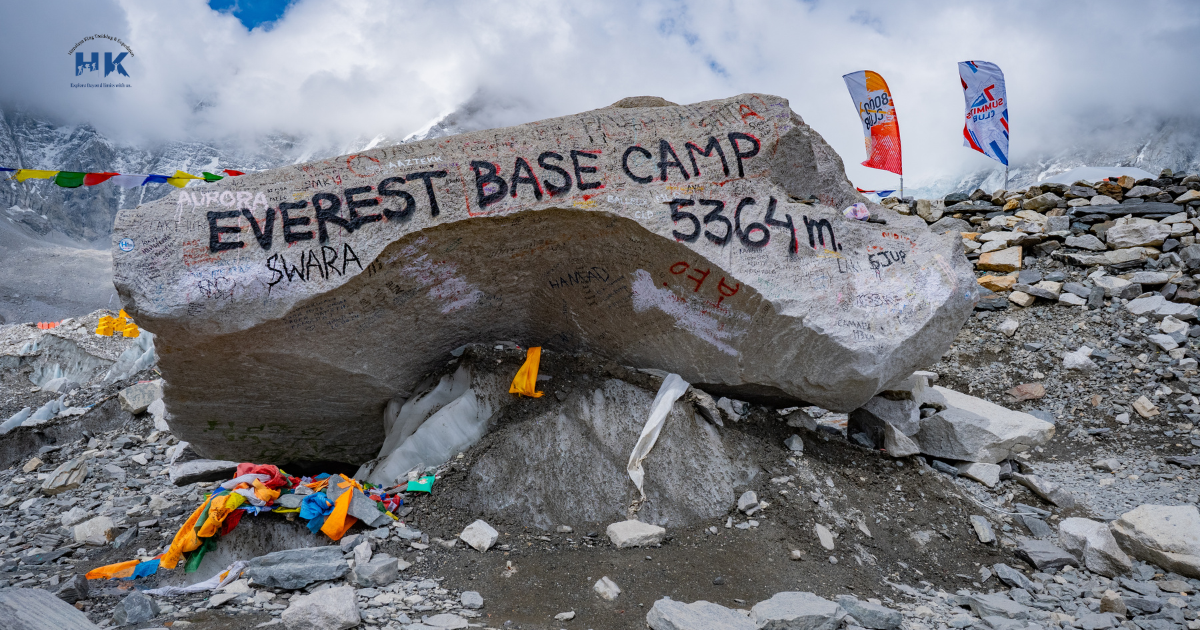
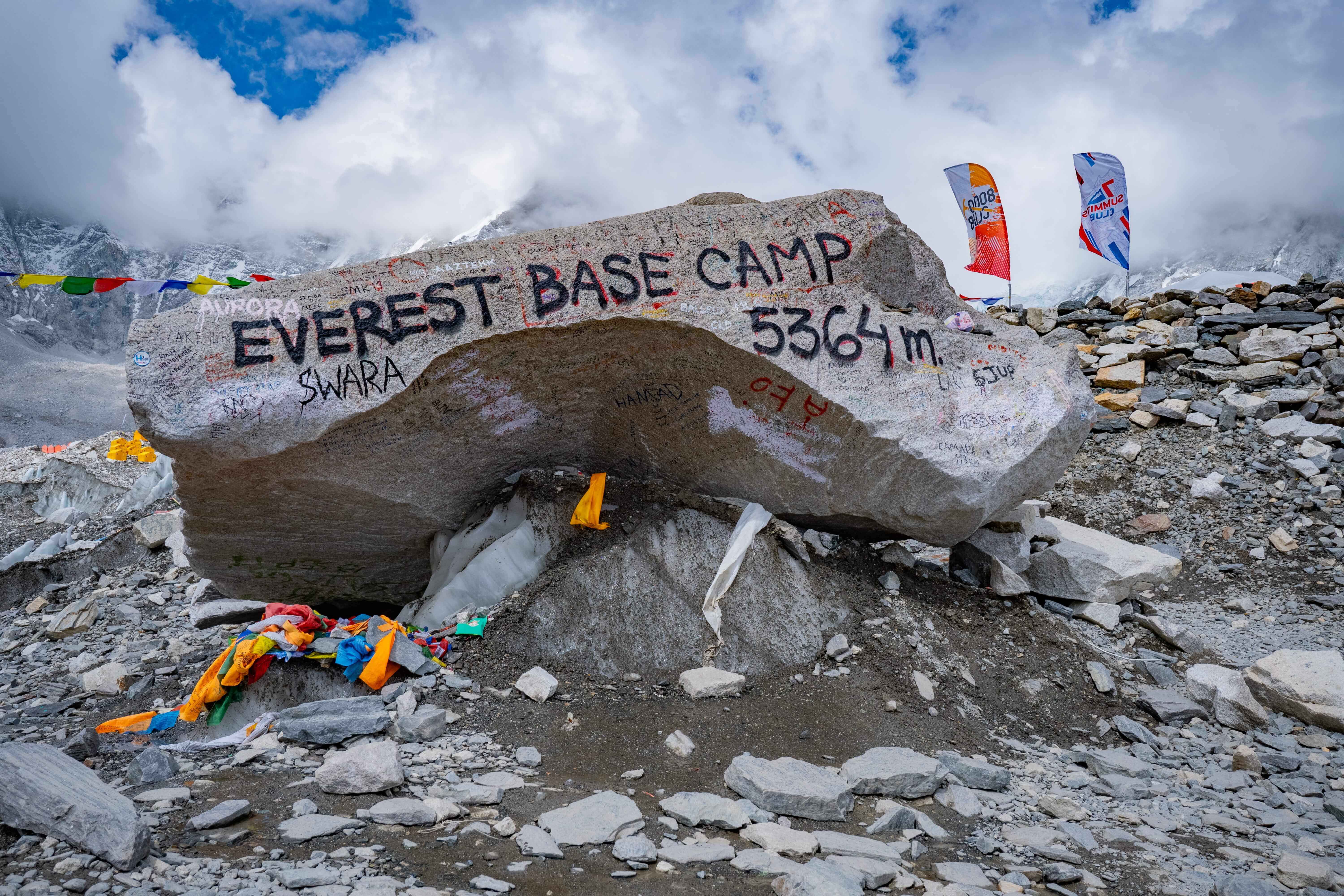
img: Everest Base Camp (5,364m)
Understanding the elevation of different points along the Everest Base Camp route is crucial for proper preparation. When you ascend from the lower valleys toward the high Himalayas, the air becomes thinner, and the amount of oxygen available decreases. For this reason, knowing the Everest Base Camp elevation in feet and metres, understanding the trek's highest points, and recognizing the symptoms of altitude sickness can make your journey safer and more enjoyable.
The elevation of Everest Base Camp is approximately 5,364 metres (17,598 feet) above sea level on the Nepal side of Mount Everest. Reaching this altitude is a major achievement because the environment is significantly different from what most people experience at lower elevations. At Everest Base Camp, trekkers are surrounded by enormous Himalayan peaks and glacial landscapes. Although the summit of Mount Everest is much higher and requires a long dedicated Everest Expedition, reaching Base Camp offers a chance to stand at the starting point for climbers attempting to reach the world’s highest mountain. The gradual increase in elevation throughout the trek is one of the most important aspects of the journey. Trekkers do not travel directly from Kathmandu to Everest Base Camp. Instead, the classic itinerary involves several days of walking through villages, suspension bridges, rivers, and mountain valleys, allowing the body time to adapt to the increasing altitude.
Elevation Profile of the Everest Base Camp Trek
The Everest Base Camp route begins at a relatively low altitude and gradually climbs into the high Himalayas. The elevation changes approximately as follows:
|
Location |
Height in Meters |
Height in Feet |
|
Lukla |
2,860m |
9,383 ft |
|
Manjo |
2,840m |
9,300ft |
|
Namche Bazaar |
3,440m |
11,286ft |
|
Tengboche |
3,860m |
12,664ft |
|
Dingboche |
4,410m |
14,469ft |
|
Lobuche |
4,910m |
16,109ft |
|
Gorakshep |
5,164m |
16,942ft |
|
Everest Base Camp |
5,364m |
17,598ft |
|
Kalapatthar |
5,644m |
18,519ft |
These figures demonstrate how dramatically the elevation changes during the trek. The journey from Lukla to Everest Base Camp involves gaining more than 2,500 metres of elevation. However, altitude is not simply about reaching a particular number. How quickly a person gains elevation, how much rest they get, hydration, physical condition, sleep quality, and individual adaptation all influence how the body responds.
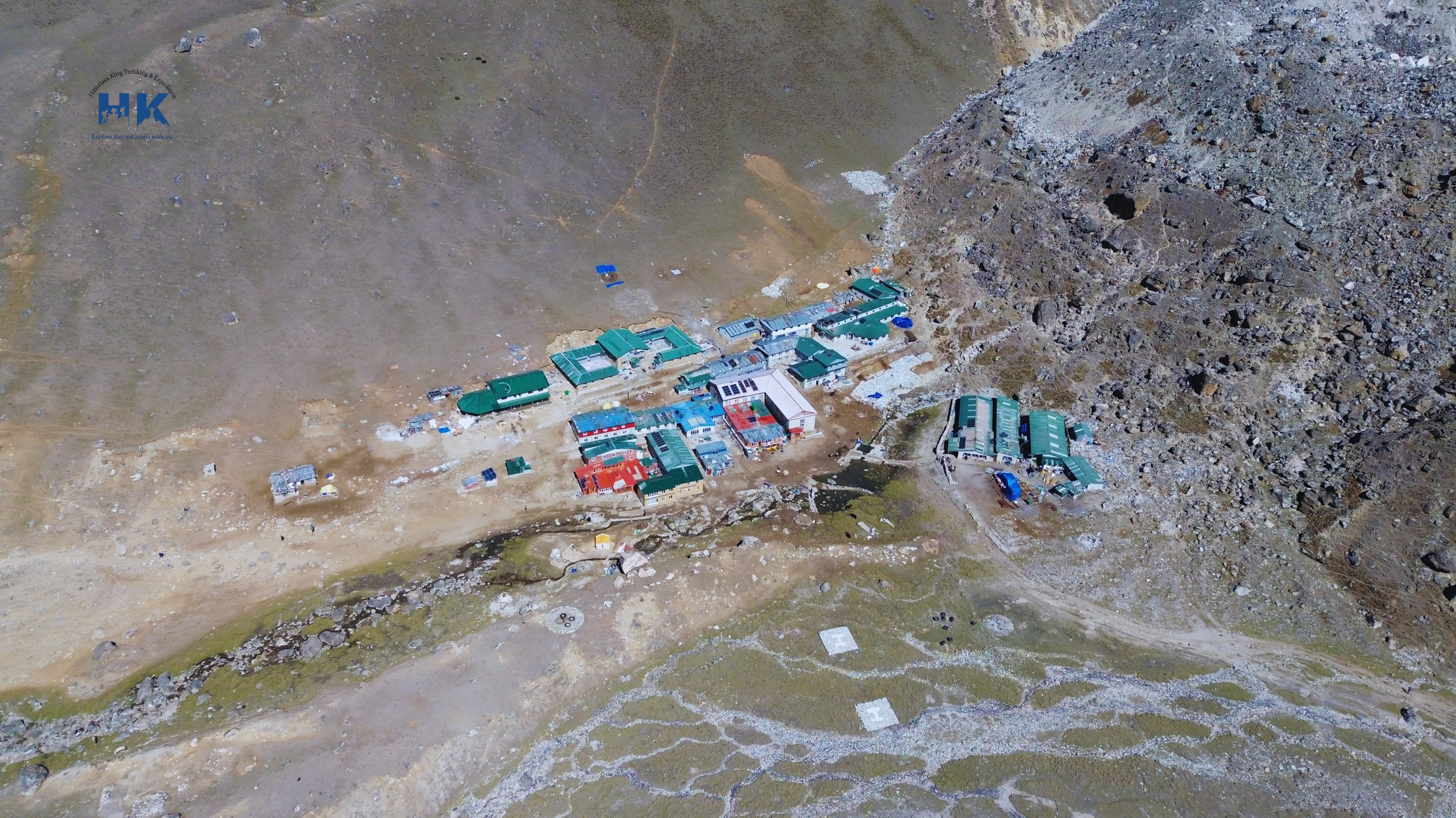
img: Gorekshep (5,164m) from aerial view.
Also, the Everest Base camp has two routes: one from Nepal and one from Tibet.
South side Everest Base Camp of Nepal
The South Everest Base Camp in Nepal is the most popular and adventurous route. Everest Base Camp stands at the base of Mount Everest at 5,364 m (17,598ft), and offers spectacular views of numerous Himalayan giants. From Nepal, you can experience the natural and cultural beauty more deeply through the Khumbu Valley. Because the elevation increases gradually, acclimatization is an important part of the trek. You usually spend additional nights at higher settlements to allow your body to adjust to the decreasing oxygen levels. You will trek from Lukla to Everest Base Camp and back to Lukla.
Northern side of Everest Base Camp of Nepal
On the opposite side of Mount Everest from Nepal. The other side of Everest Base Camp lies in Tibet, China, and stands at 5150 M (16896ft). The northern approach provides a different perspective of Mount Everest and is known for its vast Tibetan landscape. Compared with the Nepal route, the North Base Camp can be accessed more easily by road, although trekking opportunities are also available in the surrounding region. The route generally offers broad views across the Tibetan Plateau and a different cultural experience. Tibet Everest Base Camp route involves a short trek duration; more driving makes it easier to complete the trek to Everest Base Camp from the Tibet side. You can explore the traditional monasteries, architecture, and lifestyle of Tibetans, Glaciers, holy lakes, and traditional villages along the trail.
The Importance of Acclimatization
Acclimatization is one of the most important elements of a successful Everest Base Camp trek. It refers to the process through which the body gradually adapts to lower oxygen levels at higher elevations. A well-designed Everest Base Camp itinerary normally includes acclimatization days, particularly around Namche Bazaar and Dingboche. These rest days do not necessarily mean staying completely inactive. You will often take short hikes to higher elevations and then return to your accommodation to sleep at a lower altitude. This approach helps your body adjust progressively rather than being exposed to a sudden increase in elevation. The principle of “climb high, sleep low” is commonly used during high-altitude trekking and expeditions. A gradual ascent and adequate rest can significantly improve your chances of adapting comfortably to the changing environment.
Altitude Sickness on the Everest Base Camp Trek
Altitude sickness is one of the major concerns for people trekking at high elevations. It can even affect experienced mountaineers as well as first-time trekkers because susceptibility varies from person to person. The risk generally increases as a person ascends above approximately 2,500 metres. Since Everest Base Camp is more than 5,000 metres above sea level, you should take altitude-related symptoms seriously.
The most common early symptoms of mild acute mountain sickness may include:
➢Headache
➢Dizziness
➢Tiredness
➢Loss of appetite
➢Nausea
➢Difficulty sleeping
➢Shortness of breath during exertion
Some of these symptoms can occur as your body adjusts to altitude. However, they should not simply be ignored.
Recognizing Serious Altitude Problems
In some cases, altitude illness can become dangerous. Severe symptoms may include increasing breathlessness, confusion, difficulty walking normally, extreme weakness, persistent vomiting, or a severe headache that does not improve. Two serious altitude-related conditions are High-Altitude Pulmonary Edema (HAPE) and High-Altitude Cerebral Edema (HACE). These conditions require urgent medical attention and descent. The most important rule is simple: never continue ascending when serious altitude sickness symptoms are developing. If a trekker becomes seriously ill at high altitude, descending to a lower elevation is often an essential part of emergency management. Guides and trekking staff should be informed immediately if a person develops concerning symptoms.
Altitude Sickness Prevention
There is no single method that guarantees complete protection from altitude sickness. Nevertheless, several practices can reduce the risk of altitude sickness and support better acclimatization.
1. Ascend Gradually: A gradual ascent gives your body more time to adapt. Rushing from one altitude to another can increase the risk of altitude-related problems. A professional itinerary should therefore include appropriate walking distances, rest periods, and acclimatization days throughout the trek.
2. Stay Hydrated: Drinking sufficient fluids is important during high-altitude trekking. Walking for several hours in cold and dry mountain conditions can cause fluid loss even when trekkers do not feel particularly thirsty. However, excessive water consumption is not necessary. You should maintain sensible hydration throughout the day.
3. Listen to Your Body: Physical fitness does not make someone completely immune to altitude sickness. Even strong and experienced hikers can experience problems at high elevations. If you develop a headache, unusual fatigue, dizziness, nausea, or other symptoms, inform your guide rather than trying to hide them, because sometimes it can be more triggering.
4. Avoid Alcohol and Smoking: Alcohol and smoking can make it more difficult for the body to cope with the challenges of high altitude. Avoiding them during the ascent can support better acclimatization and overall well-being.
5. Eat Properly: Maintaining adequate energy intake is important during the Everest Base Camp trek. Meals containing carbohydrates, protein, and other essential nutrients can help provide energy for long days of walking. At higher elevations, appetite may decrease, but trekkers should still make an effort to eat regular meals and snacks. Mostly, you will find Dhalbhat (Rice and Lentil soup) and Thukpa (Noodles soup) can be found more often as you gain more elevation.
6. Get Enough Rest: Rest is essential during a high-altitude journey. Trekking for several consecutive days places significant demands on the body, and proper sleep and recovery allow your body to adapt more effectively.
To Know more about the Altitude Sickness and its prevention, you can visit to our, Common Challanges and How to Overcome Altitude Sickness.
Why Is Kala Patthar Higher Than Everest Base Camp?
One interesting aspect of the Everest Base Camp trek is that Kala Patthar is higher than Everest Base Camp. Kala Patthar rises to approximately 5,644 metres (18,519 feet). Kala Patthar is the highest elevation of this Everest Base Camp trek, where you will climb Kala Patthar early in the morning for one of the best panoramic views of Mount Everest and the surrounding Himalayan peaks. Although Everest Base Camp is the primary destination of the trek, the Kala Patthar viewpoint provides you with a different perspective of the Everest region. From its summit, you can enjoy magnificent views of Everest, Nuptse, Pumori, and other Himalayan peaks. The climb to Kala Patthar is demanding because of its elevation. Even relatively short uphill sections can feel difficult when the air contains much less oxygen than at sea level.
The elevation profile of the Everest Base Camp trek tells a story of gradual transformation. The trail begins in the green hills around the lower Khumbu region and slowly enters an increasingly rugged Himalayan landscape. At Namche Bazaar, you begin to feel the effects of altitude more noticeably. Beyond Tengboche, the landscape becomes more alpine, while Dingboche and Lobuche mark the approach to the higher sections of the route. From Lobuche, the trail continues toward Gorak Shep before reaching Everest Base Camp. At these elevations, every step requires more effort because of the reduced oxygen availability. This is why the Everest Base Camp trek should not be viewed simply as a walking distance challenge. Elevation gain is one of the most important factors determining the difficulty of the journey.

img: Morning scenery of Everest as seen from Kala Patthar (5,644m).
Preparing for High-Altitude Trekking
Preparation should begin well before you arrive in the Everest Region. Cardiovascular endurance, leg strength, balance, and general stamina can all be improved through regular training. Walking uphill, hiking on varied terrain, climbing stairs, and carrying a light backpack can help prepare the body for the physical demands of the trek. However, physical preparation is only one part of high-altitude trekking. Mental preparation is equally valuable. You should understand that the pace may become slower at higher elevations and that completing the journey safely is more important than maintaining a particular speed. Proper clothing, trekking footwear, sunglasses, sunscreen, warm layers, a sleeping bag suitable for cold conditions, personal medication, and a well-organized first-aid kit are also important considerations for comfort and ease.
A knowledgeable trekking guide can play an important role in monitoring altitude-related risks. Experienced guides are familiar with the Everest region, changing weather conditions, trekking routes, available facilities, and common altitude problems. A good trekking team can also help you to maintain an appropriate pace, recognize warning signs, manage daily schedules, and make sensible decisions when weather or health conditions change. Travel insurance that covers your high-altitude trekking and emergency evacuation should also be arranged before starting the journey. You should carefully check the altitude limits and activities covered by their policy.
The Everest Base Camp trek is more than a journey toward a famous Himalayan destination. It is an experience shaped by elevation, endurance, changing landscapes, local culture, and careful acclimatization. Understanding the Everest Base Camp elevation of approximately 5,364 metres (17,598 feet) helps you appreciate the physical challenge involved. The journey becomes even more demanding when you are climbing toward Kala Patthar at approximately 5,644 metres (18,519 feet). With gradual acclimatization, proper hydration, sufficient nutrition, appropriate rest, physical preparation, and awareness of altitude sickness symptoms, trekkers can approach the Everest region more responsibly. The mountains should always be respected.
Reaching Everest Base Camp is an incredible achivement on experience, but returning safely is the most important part of the adventure. By understanding the altitude profile and preparing accordingly, you can focus on enjoying the breathtaking landscapes, Sherpa heritage, mountain villages, and unforgettable experience of standing beneath the world’s highest peak.
|
Planning a Trip? Get a free consultation from our travel experts with over a decade of experience. |

Chhiring Phuti
Operation
Adventure Awaits — Let’s Begin Your Journey